top of page

Tim Booth: The Circus interview
Jul 21, 2017
3 min read

Updated: 5 days ago


What is it that draws you to shoot circus performers?


“I’ve always loved shooting bodies, because I love skin, it’s like shooting sand. I love the texture of it, the curves and the shapes. The fact that it’s a mixture of both the defined and hard as well the soft edges – I just love that mix. I’ve never seen skin as being a flat thing.


We go to circus camp every year, twice this year. The performers make great shapes and they’ve got interesting bodies. So I photograph them when I can. It’s usually a bit of a rush because they are always going to a class or giving a class, and I need a bit of space to be able to pop up a light. I can’t always shoot in daylight, much as I’d like to.”


Do you try to capture their performance?


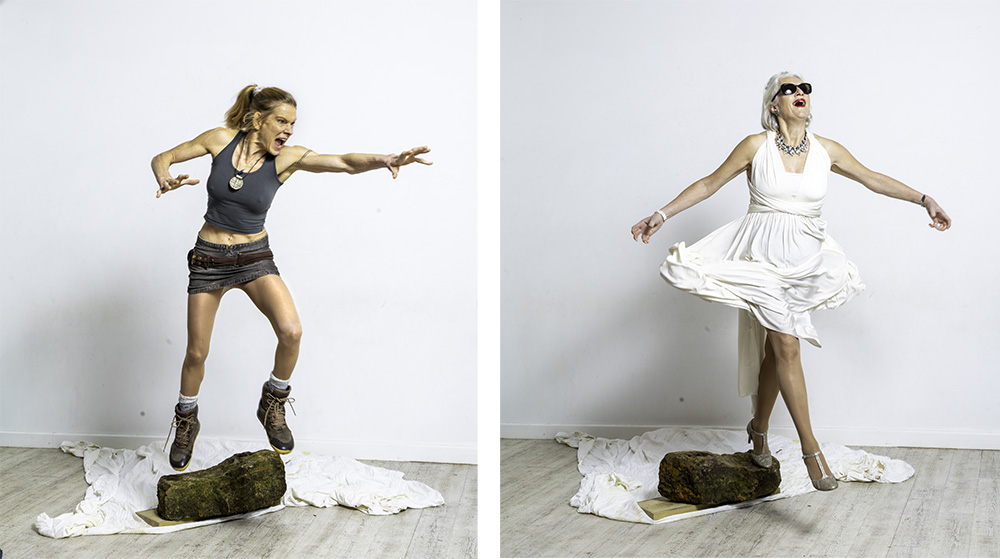
“I’m not really thinking about their performance. A circus act is fifteen minutes or half an hour in time and the whole thing is telling a story, and I don’t really want to try and tell that story in an image. For me it’s about the idea of balance, of trust, of strength and sculpture. I’m not trying to capture a moment in time – to me it’s shapes first. You never know what’s going to happen with circus – I don’t think I’ve ever done a shot where it’s what I was planning exactly, well maybe one or two. I’ll have an idea of a shape I want them to make, and, much as when I was shooting my hands, their bodies move completely differently to the way I might think they would. There aren’t many that end up as the beginning plan, because you’re dealing with too many variables.”


What style would you say you are seeking in your circus images?


“I seem to have two styles at the moment that I’m juggling with, because I like both of them equally. One of them is quite light, and the other is very dark. To me, circus is both of those things, it’s light and it’s dark, so I don’t want to abandon either one. The practical side of it is that when you’re shooting a white picture, using light backgrounds, and I’m shooting on location, it’s much, much harder to create. But I’m going to try and experiment a bit this year, when I go to a circus camp in Northumberland, whether I can get both.”


Do you always take the photograph you want to take?


“It depends, for the hands I would say I had plans for all of them, and 80 per cent of them are broadly speaking close to plan. 30 per cent are probably dead on what I was aiming for. I would say the emotion and the reaction that I hope the viewer is going to have are all still there – but the way in which that comes about can be slightly different.


You can move a millimetre and change a picture. All photography is about reading the situation I think. You can manipulate – you can move lights, models, whatever it happens to be. You can move and change things to a certain extent, but photography is not reality – it’s an interpretation of the truth, or of what you perceive to be the truth. I’m not really interested in what happened, I want to convey what I’m seeing in my head. That’s where the art is, it’s interpretive.”


Tim Booth was interviewed by Chella Adgopul on July 18th 2017


BLOG

Notes from shoots, commissions and travels.

ALL       PORTRAITS       CIRCUS       LANDSCAPES       TRAVEL       COMMISSIONS       TALKS & WORKSHOPS       PRESS       LIFE

Tim Booth: The Circus interview

CIRCUS · 21 JULY 2017


Tim Booth: The Circus interview


What is it that draws you to shoot circus performers?


“I’ve always loved shooting bodies, because I love skin, it’s like shooting sand. I love the texture of it, the curves and the shapes. The fact that it’s a mixture of both the defined and hard as well the soft edges – I just love that mix. I’ve never seen skin as being a flat thing.


We go to circus camp every year, twice this year. The performers make great shapes and they’ve got interesting bodies. So I photograph them when I can. It’s usually a bit of a rush because they are always going to a class or giving a class, and I need a bit of space to be able to pop up a light. I can’t always shoot in daylight, much as I’d like to.”


Do you try to capture their performance?


“I’m not really thinking about their performance. A circus act is fifteen minutes or half an hour in time and the whole thing is telling a story, and I don’t really want to try and tell that story in an image. For me it’s about the idea of balance, of trust, of strength and sculpture. I’m not trying to capture a moment in time – to me it’s shapes first. You never know what’s going to happen with circus – I don’t think I’ve ever done a shot where it’s what I was planning exactly, well maybe one or two. I’ll have an idea of a shape I want them to make, and, much as when I was shooting my hands, their bodies move completely differently to the way I might think they would. There aren’t many that end up as the beginning plan, because you’re dealing with too many variables.”


What style would you say you are seeking in your circus images?


“I seem to have two styles at the moment that I’m juggling with, because I like both of them equally. One of them is quite light, and the other is very dark. To me, circus is both of those things, it’s light and it’s dark, so I don’t want to abandon either one. The practical side of it is that when you’re shooting a white picture, using light backgrounds, and I’m shooting on location, it’s much, much harder to create. But I’m going to try and experiment a bit this year, when I go to a circus camp in Northumberland, whether I can get both.”


Do you always take the photograph you want to take?


“It depends, for the hands I would say I had plans for all of them, and 80 per cent of them are broadly speaking close to plan. 30 per cent are probably dead on what I was aiming for. I would say the emotion and the reaction that I hope the viewer is going to have are all still there – but the way in which that comes about can be slightly different.


You can move a millimetre and change a picture. All photography is about reading the situation I think. You can manipulate – you can move lights, models, whatever it happens to be. You can move and change things to a certain extent, but photography is not reality – it’s an interpretation of the truth, or of what you perceive to be the truth. I’m not really interested in what happened, I want to convey what I’m seeing in my head. That’s where the art is, it’s interpretive.”


Tim Booth was interviewed by Chella Adgopul on July 18th 2017
 

MORE STORIES

Women on the Edge

CIRCUS · 9 MARCH 2026

Women on the Edge

8 December 2025

Solomon Bain

CIRCUS · 8 JULY 2025

Solomon Bain

8 December 2025

Suspended Ambition

CIRCUS · 4 JULY 2025

Suspended Ambition

8 December 2025

  • Instagram

© 2026 TIM BOOTH   ·   COOKIES

bottom of page